My crystalline sabbatical

Hey guys, I mentioned that I am on sabbatical from July till the end of December, 2013. I will elaborate. For a number of reasons I chose not to leave Toronto but to stay here and concentrate on something that is totally new to me. With this in mind, I joined SGC (Al Edwards, its director, is an old friend of mine).  Here is their website:


http://www.thesgc.org/scientists/groups/toronto


I now work with Elena Dobrovetsky. She is awesome. I am learning a ton about protein crystallography, all the way from expression to mounting of crystals and data collection. I will be posting my progress reports. Just 2 weeks ago we set up 960 crystallizations of some epigenetic domains (more on that later) and got some really nice crystals already (actually only one condition delivered – attrition was high). My ultimate goal is fragment based screening using crystallography. This stuff is a ton of fun. I can hardly be found at my main office (Lash Miller Building), but I am fine with that – if you do a sabbatical, you may as well try to see that there really is a separation from your regular job. I asked my wife “Do you think my students miss me?” and she said “Ha ha ha! No way!!”. I suppose this is true… I am not sad though!


Boron in peptides

Here is our most recent addition to the lineup of amphoteric reagents. I refer to alpha-boryl isocyanides. These molecules enable synthesis of boron-containing peptides and heterocycles. Adam Zajdlik (about to start his second year of PhD in my lab) developed these species… Check out the photo – these are white solids (and they do not stink the way most isocyanides do… We call them “peer-friendly” isocyanides…)

Image

Image

http://onlinelibrary.wiley.com/doi/10.1002/anie.201302818/abstract

If you want to know some history, the isocyanides emerged on the heels of some superb foundational work by my former PhD student Zhi He (now doing his post-doctoral work with Tim Jamison at MIT). Zhi developed alpha-boryl aldehydes using MIDA group on boron:

Image

http://pubs.acs.org/doi/abs/10.1021/ja205910d

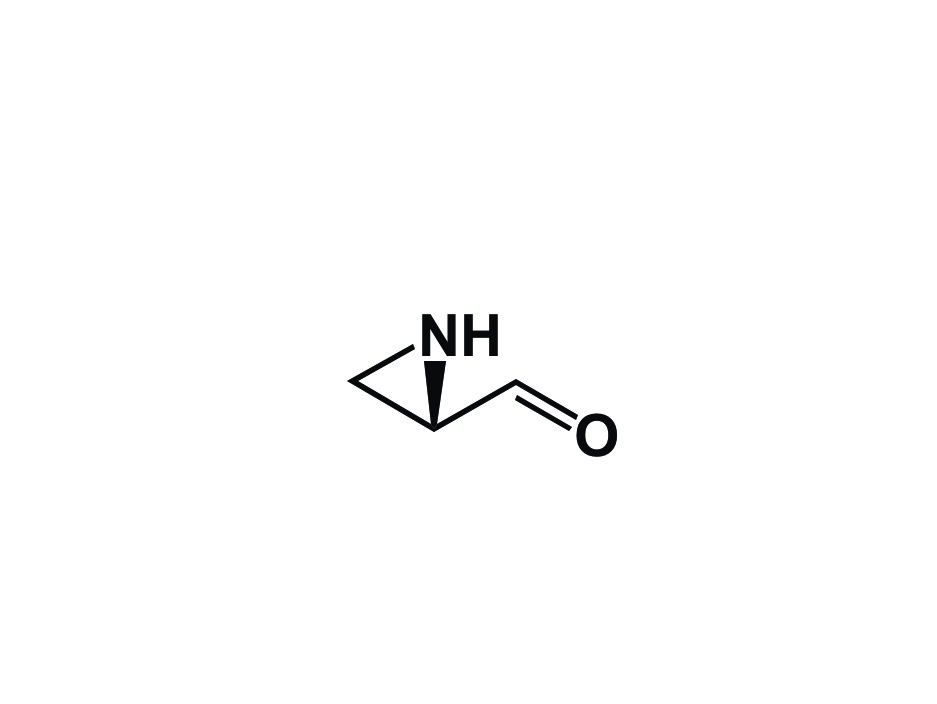
We were happy to publish this chemistry in response to questions I have been getting at conferences ever since we disclosed the aziridine aldehyde synthesis with Ryan Hili. People were asking me: “OK… the amine/aldehyde combo is cool, but can you think of a molecule where a carbon nucleophile is orthogonal to the aldehyde group?” Thanks to Zhi, we have an answer!

I want to end this post by saying that the unusual stability of our growing line-up of borylated reagents is due to the MIDA functionality, which has been popularized by Marty Burke (http://www.scs.illinois.edu/burke/). Marty has done some pioneering work with MIDA boronates.

What is “amphoteros”

The word amphoteros (the name of this blog) comes from Greek and means “both worlds”. We use this term to describe molecules that have two opposing properties. You might think such molecules should be unstable, but we know how to force them to “behave”. Here is one we developed with Ryan Hili (now at the University of Georgia):untitled

http://pubs.acs.org/doi/abs/10.1021/ja065898s

Ever since this 2006 paper, my lab has been busy exploring the strange world of amphoteric molecules… One of the things you will read in my blogs is how we go about developing this chemistry. You will also learn about the students who have put their hard work into this area.

It’s live!

After years of contemplating science blogging, I decided to roll up my sleeves and get going… I think this is where science publishing (at least some of it) is likely heading. This is my main motivation. As well, I just want to let people know about what we do in my lab at the University of Toronto:

http://www.chem.utoronto.ca/wp/yudinlab/

Now that I am on sabbatical until the end of December 2013, I have some more time – so here you go!