The idea of ligand efficiency as a metric for comparing new heterocyclic motifs has always intrigued me. Things get particularly interesting when heterocyles are combined with the elements of reversible covalent inhibition. In his 2013 paper in JACS, Taunton and colleagues described a series of reversible covalent inhibitors of MSK/RSK-family kinases that contain noncatalytic cysteine residue close to the active site. In fact, C436 is found in only 11 of 518 human kinases (so there are reasons to go after this cysteine). The acrylamide fragments described in the Taunton paper were later used to develop potent kinase inhibitors, underscoring the fact that ligand efficiency of reversible covalent fragments was sufficient for further elaboration. Below you see a view I created using PyMol, showing how the indazole scaffold of the acrylamide inhibitor forms the expected hydrogen bond pattern with the hinge region. The authors point out that the indazole core does not extend beyond the gatekeeper T493. Interestingly, unfolding of the indazole fragment/RSK2 adduct with guanidinium-HCl resulted in quantitative recovery of the fragment, indicating that the covalent bond was formed reversibly. It will be interesting to see if good levels of kinetic discrimination can be achieved with reversible covalent inhibitors. From my point of view, one of the most interesting lessons offered by this study is that potency is not solely driven by the free energy of covalent bond formation.
Category Archives: Uncategorized
Poking at the Diels-Alder reaction
I am sitting on my Oakville-bound train that is about to depart Union Station in Toronto. This winter has been super cold in our part of the country. It’s kind of funny because I have been hearing way less about global warming on the news. Weird, eh? I guess we’ll wait for a couple of months for people to start complaining. OK, I am being a troll.
Tonight I want to talk about the venerable Diels-Alder reaction. There is no need to praise it beyond the superstar status it already has. Instead of empty accolades, I will pay a facts-based tribute to this process and, in the spirit of recent discussions, try to poke at it.
Are there 6-membered rings that cannot be made using this reaction? I can’t think of too many. The classroom value of Diels-Alder reaction is also undisputed: we beat this reaction to death when we teach frontier molecular orbitals (FMO) method, to the extent that some students leave our classes with an impression that this cycloaddition (and perhaps some electrocyclizations and sigmatropic reactions) defines the FMO theory in its entirety, which is not true at all. Nonetheless, this is still one of the most awe-inspiring reactions out there. To challenge its bulletproof status, one might want to subject Diels-Alder reaction to the limits of angular strain, hoping that that the cycloaddition might “crack”. Time and again, though, this resilient reaction has surprised us in most admirable ways. Take a look at one of my favorite papers on this subject. This is a study published by Dirk Trauner and Ken Houk some years ago. I would not have expected that imposing such severe strain on the 6-membered transition state would deliver any reasonable outcome. But the reaction works at 30 oC. There are some other interesting insights offered by this paper, so check it out. I think the lesson here might be that no matter how strain-crazy your idea might be, you should just give it a shot if it involves the magical 6p-electron transition state.
http://pubs.acs.org/doi/abs/10.1021/ja050135a
Now… Keeping up with the flavor of my recent post on heteroatom-heteroatom bonds, here is another viewpoint from my “vault of near-impossibles.” While there are countless examples of C-C and C-heteroatom bond formations using Diels-Alder reaction, it is interesting to note that heteroatom-heteroatom connections aren’t really made using this process. If you have a good example – please let me know. There is probably a fairly decent energetic argument against the transition state that produces a link between two heteroatoms (I should ask Ken Houk about this). Overall, I feel a bit better about showing that not everything is hunky-dory in the Diels-Alder bag of tricks. I will feel this way until you guys show me that I am wrong (or will you?).
Stitching with radicals
Tandem cyclizations that result in rapid formation of complex molecular skeletons have always attracted my attention, especially when fairly unusual intermediates are implicated in the corresponding reactions. Below you see a really cool sequence recently reported by Jennifer Stockdill of Wayne State University. The reaction targets the tricyclic system of daphniyunnine (what a mouthful…). The first step is N-chlorination, which is achieved by the use of NCS (N-chlorosuccinimide). N-chloroamines are interesting synthetic intermediates that can get tantalizingly close to losing the elements of HCl upon treatment with base, yet are often surprisingly stable and isolable. Upon alcohol oxidation in the example below, the tricyclic system is set up by way of a tandem radical cyclization, which starts off the aminyl radical. The authors highlight the neutral nature of the aminyl radical undergoing 6-exo cyclization in their sequence. It will be interesting to see a completed synthesis (hopefully some time soon).
I thought I saw it…
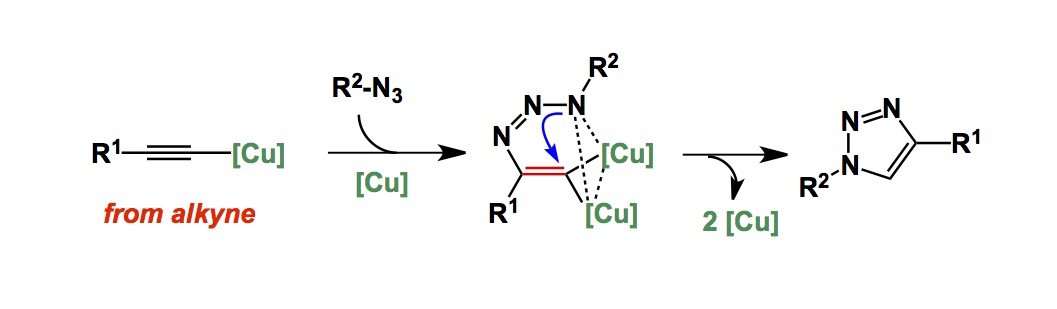
Aromatic heterocycles form the backbone of drug discovery. It is difficult to deny this statement for two simple reasons: a. the relative resistance of aromatic heterocycles to oxidation and b. their capacity to partake in a gamut of interactions with protein targets (hydrogen bonds, hydrophobic interactions, etc). While linking heterocycles into oligomeric chains is best done by way of cross-coupling reactions, there is no better alternative to condensations when it comes to making heterocycles themselves. Copper-catalyzed azide/alkyne cycloaddition is an exception to this rule. If you are thinking about a pyrrole, a pyridine, or a pyrimidine (the list can go on and on), nothing comes close to gaining aromaticity by kicking out water molecule(s) from a carbonyl precursor. Aromatic heterocycles that contain N-N or N-O bonds belong to a particularly vast class of useful molecules. Some time ago, I wondered about reactions that provide access to pyrazoles or isoxazoles by building a heteroatom-heteroatom bond as part of the process. For the life of me, I could not think of an example. You might say: why bother? As a matter of fact, I would agree because hydrazines and hydroxylamines are some of the most versatile and readily accessible nucleophiles. However, if I put my basic scientist hat on, I want to see reactions of this kind. Until we get there, my claim stays put: there are no examples where heteroatom-heteroatom bonds are made in the course of aromatic heterocycle synthesis.
http://pubs.acs.org/doi/abs/10.1021/ol801506y
I was reading a cool paper by the Swedish group led by F. Almquist and, upon a cursory look at one of the schemes, I said to myself: “Darn, this must be it! The N-N bond construction…”. Take a look above. On a sober glance, however, the reaction amounts to a Sandmeyer process gone “haywire”. In this reaction, the targeted diazonium intermediate activates the proximal methyl group. The reaction is rather unusual, which is why I like it. Still, this does not affect my assertion that there are no useful ways of making aromatic heterocycles by building heteroatom-heteroatom bonds. There might be something I am missing, of course. But I do not mean an obscure example, ladies and gentlemen. Please give me something synthetically useful.
Apart from the interesting pyrazole-forming reaction, this paper provides a neat example of peptidomimetic design. The tricyclic pyrazole-2-pyridone-thiazoline structures accessible with the Almquist method incorporate a dipeptide sequence within a rigid framework. Importantly, the two substituents that correspond to amino acid side chains may be varied, enabling construction of compounds libraries.
Squeezing fragments into cycles
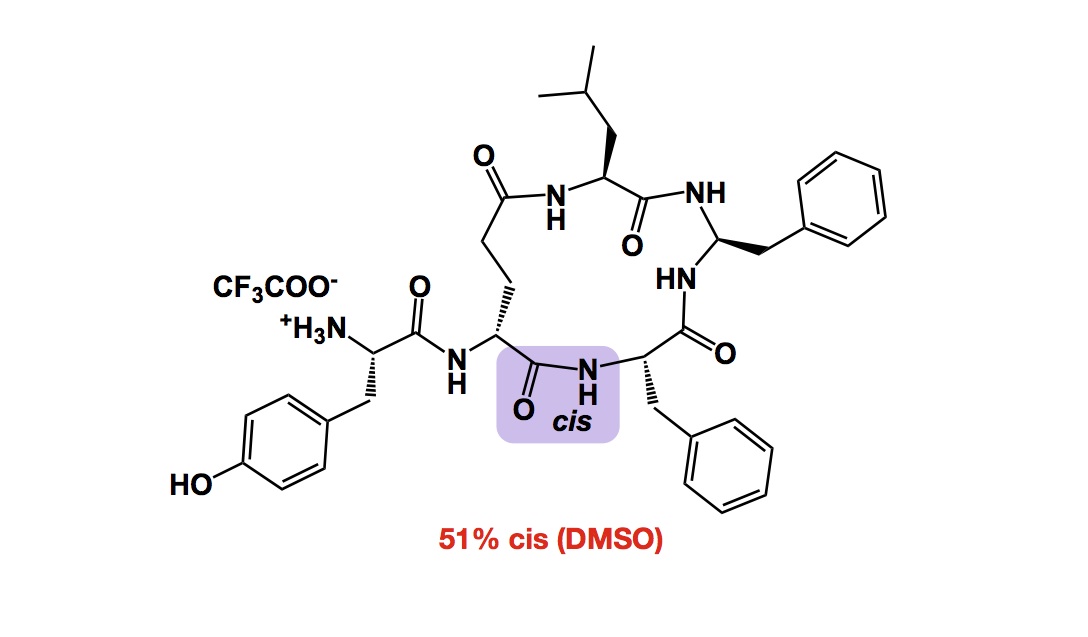
Today is dedicated to the efforts of Chris White, my PhD student who is soon leaving us for Zurich, where he will work as a postdoctoral associate at the ETH in the laboratory of Professor Jeff Bode. Over the past 3 years, Chris has been painstakingly perfecting a reaction that amounts to insertion of amino acid fragments into cyclic peptides. While there is no precedent for integrative operations in the realm of synthetic chemistry, nature is known to do it. One particularly well-known process in biology involves integration of DNA fragments into host chromosomes. This function-driven insertion of “foreign” fragments into existing biological entities has far-reaching consequences. When we think about synthetic challenges in our lab, we often draw inspiration from nature. Several years ago we asked a question: if the retroviral enzyme integrase can do it by binding both termini of viral DNA, can we think of a reductionist approach to this process? How about instead of DNA and enzymes we teach some new tricks to lithium hydroxide and simple coupling reagents? Chris has capitalized on the susceptibility of N-acyl aziridines to amide hydrolysis – their “Achilles’ heel” – and developed a tool to site-selectively incorporate molecular fragments into cyclic peptides. We think that this method should be readily adaptable to solid phase synthesis, be extended to split and pool protocols using molecular fragments of varying diversity, and help create non-amide bond forming approaches to fragment integration. Our lab will now actively work in these directions. Thanks Chris for your trailblazing efforts!
Small amounts of alcohol
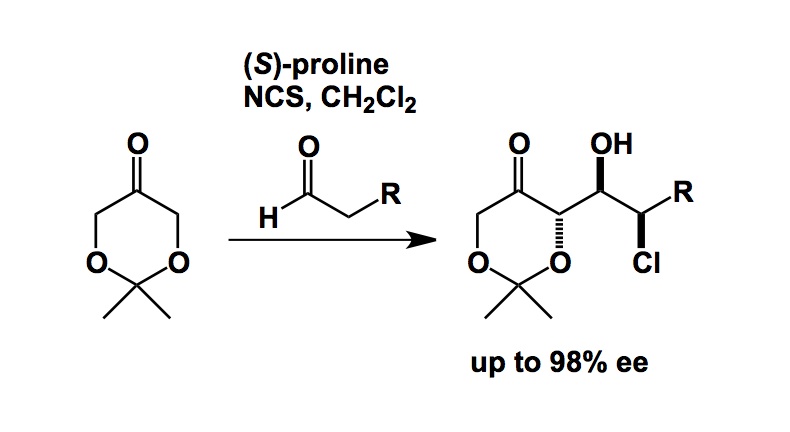
I flew into Boston last night and had a great time at the Chemistry Department (Boston University) earlier today. A special thanks goes to Professor Aaron Beeler, my main host, who is running an innovative program in flow synthesis, bioactive molecule synthesis, and reaction discovery at BU (http://www.bu.edu/chemistry/faculty/beeler/). I met Aaron last Summer at the Gordon Conference on High-Throughput Chemistry and Biology, where he invited me to visit his storied department. I just came back from our dinner at the Eastern Standard (awesome oysters there, ladies and gentlemen) with Aaron and Professor Scott Schaus. While we were having our drinks at this fine establishment, I kept thinking about the significance of much smaller amounts of alcohol. Sounds like an oxymoron, I know… What I mean is this: while talking to Scott earlier in the day, I was reminded about the significance of achiral additives in asymmetric catalysis. Below is a link to the Angewandte paper by Scott, who discovered a superb ketone allylation process and spent several years perfecting this catalysis.
http://onlinelibrary.wiley.com/doi/10.1002/anie.200904715/abstract
The pre-2009 mechanistic work by the Schaus lab showed step A to be rate-limiting. The rate order in alcohol was not established at that time. One could logically assume this additive to have an inhibiting effect on the reaction. An important insight offered by the 2009 study is that the rate-determining ligand exchange process is in fact not the initial formation of the active boronate species (step A), but the liberation of the catalyst from allylation product (step B). Check out the role of the tert-butanol additive (Figure 2) on the reaction! This nice work also reminded me of the old review by Shibasaki pointing to the significance of ACHIRAL additives in ASYMMETRIC catalysis. I think we should spend way more attention to the effect of such species. Here is a link to the Shibasaki review:
Ok, I am off to bed – catching a 6am flight back to Toronto, where I am giving two lectures in my graduate class and second year organic class tomorrow… Thankfully my student Adam filled in for my CHM 249 class today!
Selenazoles
I have been fascinated with selenium-containing heterocycles, particularly after seeing the Science paper that described the co-crystal structures of a couple of selenazole-containing macrocycles with p-glycoprotein (I blogged about it on January 9th). A good way of making selenazoles would go a long way because you have to admit it – these are not your average, garden-variety heterocycles. They are exotic, yet endowed with very interesting and unusual hydrophobic properties in a dense area of space. Below is a simple method of preparing selenazoles using Ishihara’s reagent. This paper attracted my attention mainly due to the ease of converting LAH into a useful selenium transfer agent. In order to prepare Ishihara’s reagent, you need to mix LAH with elemental selenium in THF under inert atmosphere. The lithium hydrogen selenide (LiAlHSeH) is formed in situ as a gray solution that can be directly used in subsequent steps. The selenazole core was prepared by Mahler through straightforward cycloisomerization of propargyl selenoamides prepared in situ using LiAlHSeH. The method is concise and user-friendly.