A most curious peptide bond formation

There is a Gordon Research Conference dedicated to the Origins of Life. Without a doubt, this is the most eclectic gathering of some of the oddest people in the science community. I have always wanted to attend one, but never had a chance. I can only imagine the types of heated discussions that go on there. The trouble with this branch of science is that we will, of course, never be able to run control experiments to prove or disprove any hypothesis. Thus, ideas about how life emerged are relegated to conjectures. But people keep trying and I really enjoy reading about attempts to explain how some of the primordial forms of life might have emerged.

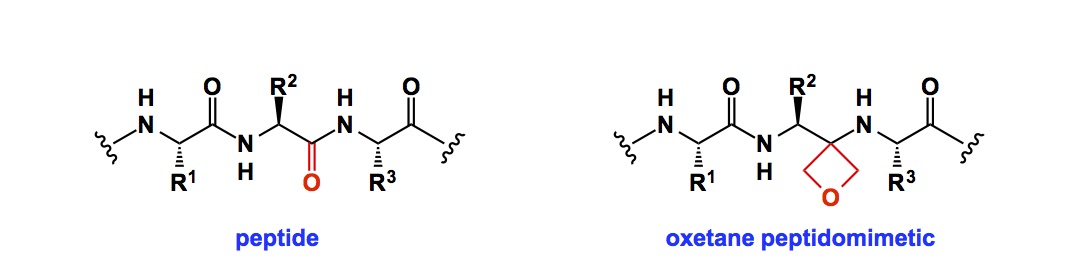
Replication and molecular evolution using trivial (pre-RNA and pre-DNA) molecules has been shown in models, but never convincingly enough. We don’t even need to go as far as replication: thinking about how peptide bonds might have been created in water is tough enough! This allows me to bring up a curious paper by Ghadiri and co-workers, published in Astrobiology (this is not something I read all the time…). In it, the authors make a suggestion that carbon disulfide (CS2) might have acted as the coupling agent. I like this idea and I think the experiments are convincing, especially the fact that this peptide bond formation works in water. Besides COS, CS2 is certainly one of the cheapest and most readily available coupling agents, which might have been in abundance when all those sparks were flying on earth several billion of years ago.

2.jpg

http://online.liebertpub.com/doi/abs/10.1089/ast.2015.1314

Vinylogy: a force to be reckoned with

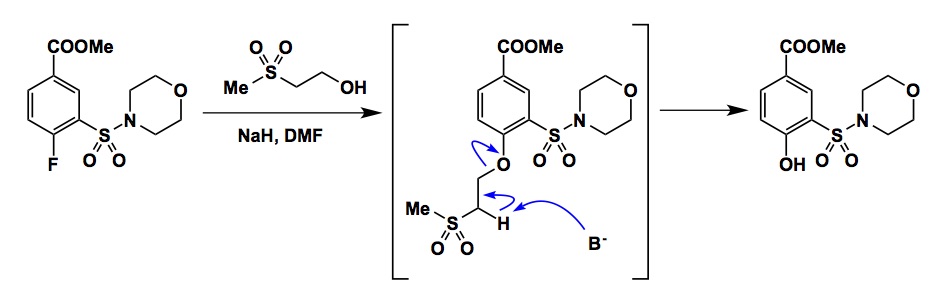
I have always been interested in mechanisms that lead to unusual elimination outcomes. Not that a decent leaving group is lacking in the reactions I am thinking about. On the contrary, a fairly middle-of-the road leaving group is, in fact, present. It’s just that the bond that is being broken is not the one you would typically expect to break. Consider the example that features an sp2 carbon-bound bromine (below). I learned about this interesting case from Professor Derrick Clive of the University of Alberta. I was in Edmonton over the past two days, attending a PhD exam of one of John Vederas’s students, Shaun McKinnie. The defense went really smoothly (it was an excellent thesis) and my long day culminated in a nice dinner with John and Shaun. But I kept thinking about the elimination sequence discovered in the Clive lab. You have to agree that it represents a peculiar reaction. The process features a tautomerization and aromaticity-driven removal of the sp2 carbon-bound bromine. While some might think that this is no miracle, especially once you consider how the double bond “dance” places bromine in a perfect position to eliminate in a vinylogous manner, I think this is the point here. The sequence offers a useful trick to make unusual phenols, among other things.

3

http://pubs.acs.org/doi/abs/10.1021/acs.joc.5b00192

Towards 2D diversity

We recently decided that there is a real need to make some new aromatic bis(heterocycles) that contain boron (http://pubs.acs.org/doi/full/10.1021/acs.orglett.5b02741)… This sounds rather random and you might ask – why?

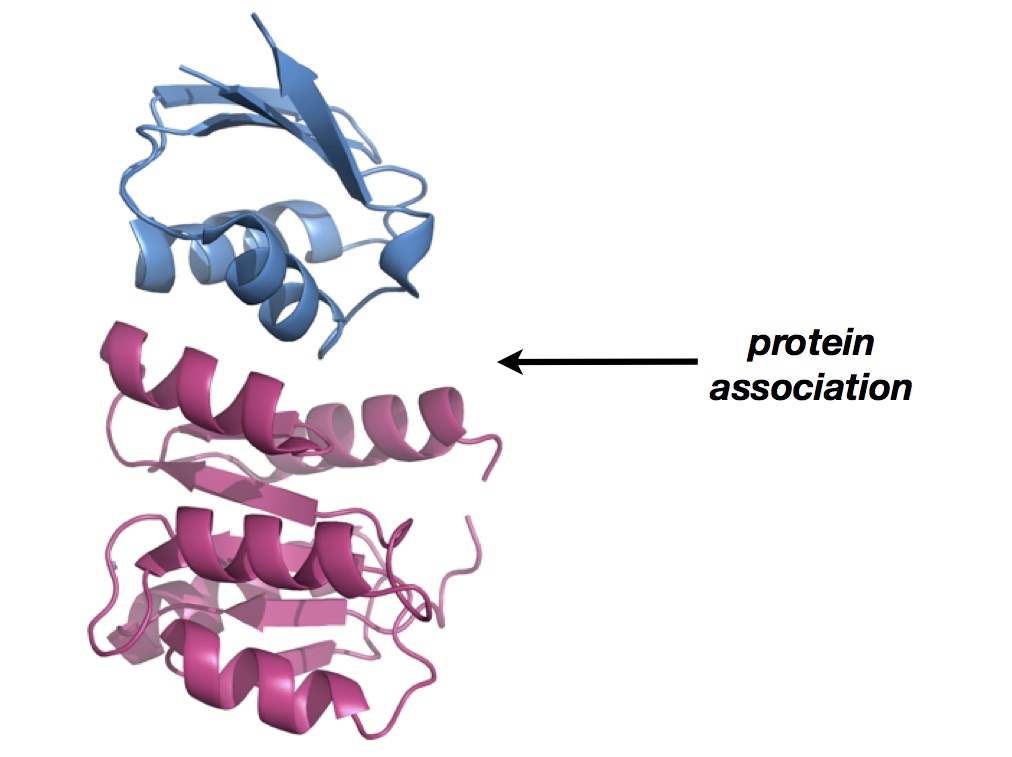
I have a theory that the idea of diversity-oriented synthesis has been widely misused by the organic community. Below you see a slide I like to show in order to make my point. This harkens back to something I already mentioned in the past, namely that chiral centers really hurt discovery of novel protein binders (once you have a target, I am not discussing phenotypic screens). I primarily refer to fragment-based binders that are useful in finding bioactive molecules. There is nothing inherently wrong with having chiral centers, but they must enter the picture at the “right time”. This corresponds to the point when target specificity needs to be built (this is development, not the initial discovery). When chiral centers are considered too early (think of all those collections that contain obscure compounds with complex 3D structures), there is too much bias and chances to discover binders to a particular protein target are smaller. The idea of diversity-oriented synthesis has been a blessing to countless chemists by allowing them an easy way to defend reporting obscure compounds in their papers, but I don’t think there are many examples of utility against a chosen biochemical target. One might even propose that molecules can be chiral and less chiral. Don’t laugh: any oligo(heterocycle) devoid of chiral centers is, of course, bound to its receptor in a chiral conformation. In this case, I like to think of “weak chirality”.

p1

If you agree with the view that achiral molecules increase the chances of discovery, how might we innovate in 2D? One might surmise that there is no room for discovery as the vast majority of small aromatic heterocycles have been made. While this is technically not true, there are indeed real problems in designing something that is flat, composed of heteroatoms and carbons, yet novel. Enter boron. This element allows us to consider bis(heterocycles) that are unusual and totally novel from the standpoint of dipole arrangement. Are they stable across a wide range of physiological conditions? This is something we are trying to understand at the moment. For now, I would like to thank my students who have been involved in this project, primarily Dr. Shinya Adachi (now back in Tokyo, working with Professor Shibasaki) and Sean Liew (who is still with us).

2

The influence of reaction exothermicity on kinetics

The principle of microscopic reversibility (PMR), Curtin-Hammett principle (CHP) and Hammond postulate (HP) are the three pillars of organic reactivity. PMR enables us to construct a reasonable reaction path if the mechanism of the reverse process is known. CHP tells us that stability and reactivity do not necessarily correlate, whereas HP allows us to infer about the transition state structure using intermediates that are sometimes detectable and/or isolable. It is difficult to see what we would do without these fundamentals.

I am teaching my first year organic chemistry course and, while we do not go into the details of PMR and CHP, we do discuss the main elements of HP. The reason HP is useful is that it allows us to weed out the pervasive fallacy “Compound Z must be the reaction product because Z is more stable than the alternative Y”. While I have a habit of saying that it is generally incorrect to state that more stable things are kinetically preferred, it is not necessarily true and here is an example.

Professor Alabugin (http://www.chem.fsu.edu/~alabugin/), whose great talk I just heard at the conference in Moscow, recently published an influential paper in which he re-examined the course of some anionic cyclizations. It appears that there must be a major re-evaluation of some stomping grounds of cyclization mechanisms involving alkynes. The 4-endo/5-exo comparison presents a particularly interesting scenario: the reason for the lower barrier to form the 5-membered ring lies in the exothermicity of the reaction. In other words, the transition state that leads to the formation of the 5-membered ring is lower because the product is more stable. This is an important application of the Marcus theory to polar mechanisms.

2

http://pubs.acs.org/doi/abs/10.1021/ja203191f

A matter of control

There has been a lot of discussion about Perola’s claims that 60% of drugs do not bind their targets in a local minimum conformation (http://pubs.acs.org/doi/abs/10.1021/jm030563w). Many people have challenged this viewpoint, saying that it is as an artifact of errors of crystallographic analysis. While I am still not sure which side of the debate I am on, it is good to remember that innate conformations of organic molecules are governed by a few well-understood principles. Let’s talk about allylic strain and its relevance to biological activity. Earlier today I was wondering about cases that display powerful, yet subtle, “allylic control” over bioactive forms. If such occurrences could be traced to (hopefully) one correctly positioned substituent, a particularly good lesson might be served. I looked through my vault of papers and retrieved a classic on dihydropyridines, which are celebrated calcium channel blockers (http://onlinelibrary.wiley.com/doi/10.1002/anie.199115591/abstract). Take a look at Scheme 12. Here we have an awesome manifestation of A1,2-strain that “pushes” the nitrophenyl group in axial orientation. Incidentally, the NO2 portion of the molecule is not some innocent by-stander. This group enforces adoption of the desired conformation, which is why I love this example: the conformational control can be attributed to a small group.

2

To move the sweet spot

I just came back from KOST-2015, an international congress on heterocyclic chemistry in Moscow, Russia. The conference was superbly put together by my friends, Profs. Nenajdenko and Vatsadze in memory of Prof. Kost (http://www.kost2015.ru). Of all the scientific vignettes I was exposed to, one particularly thought-provoking insight comes to mind. It deals with the inner workings of Prof. Togni’s electrophilic trifluoromethylation reagents (http://pubs.acs.org/doi/pdf/10.1021/cr500223h). In his talk, Togni described the genesis of this research program and commented on a variety of nucleophilic partners that can be trifluoromethylated with the help of his hypervalent iodine-containing molecules. I am showing one of them below without any intent to dwell on the specific reactions. Two forms exist: the parent and the protonated one, with the latter being the desired electrophilic trifluoromethylating species. In order to maintain high selectivity of CF3 transfer, one needs to avoid decomposition by way of premature cleavage of the Cphenyl-I bond. If one maintains the oxygen atom in its protonated form, this detrimental pathway is avoided. The question is: why? This is where frontier orbitals come to rescue. I am not going to show their symmetry as it would be rather tedious. In the aforementioned Chem. Rev. article, you can see all those red and blue blobs. The key is that protonation changes the area where LUMO is localized, offering a compelling rationale for why the non-protonated form is labile at the Cphenyl-I bond. I thought this is a great example of using frontier molecular orbitals to explain the reactivity preferences and I hope students take this lesson to heart. There is no way there is anything terribly complex in some of these computations.

If you wonder where those hypervalent iodine species come from, they are derived from TMSCF3, whose chemistry I had a pleasure of working on in Professor Prakash’s lab a while back (http://pubs.acs.org/doi/abs/10.1021/cr9408991). It is curious that, among many different areas of use, the nucleophilic trifluoromethylating reagent (TMSCF3) has found application in efforts to generate electrophilic trifluoromethylating reagents.

2

On formyl hydrogen bonds

We had a lively discussion regarding the ene reaction at our weekly group meeting today. This was done as part of a synthesis problem set and reminded me of an under-appreciated principle that should remain important in attempts to understand aldehyde reactivity. I refer to formyl hydrogen bonds, the likes of which are on display in a recent paper by Krische and Houk in JACS (http://pubs.acs.org/doi/abs/10.1021/jacs.5b04844). The appreciation of this interaction goes back to the foundational studies by Corey and co-workers. Here is a link to a great overview that covers some of the structural aspects of the formyl hydrogen bond: http://pubs.rsc.org/en/Content/ArticleLanding/2001/CC/B104800G. I have also included the accepted transition state model for the Lewis acid-catalyzed ene reaction developed by Mikami and colleagues. This constitutes a particularly striking example of the capacity of aldehydes to participate in hydrogen bond formation. There have been several X-ray structures that provide atomic level evidence for formyl hydrogen bonds. On various accounts, it is estimated to be worth between 6 and 9 kcal/mol, which is not insignificant. By all means, Lewis acid coordination to the aldehyde oxygen atom enhances the acidity of the aldehyde CH functionality.

2